
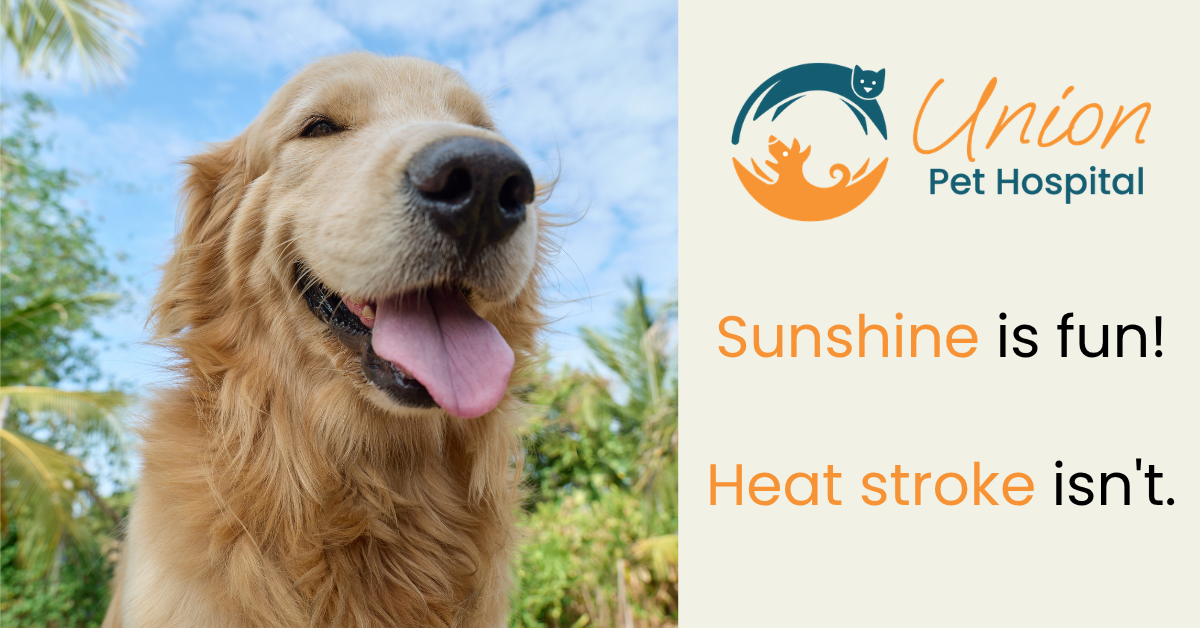
Whether you’re taking your dog for a summer walk, spending time outside, or simply running errands, understanding heat stroke is one of the most important ways to keep your pet safe.
Why Do Pets Overheat So Easily?
Unlike people, dogs and cats don’t sweat to cool themselves.
Instead, they rely primarily on:
- Panting
- Small sweat glands on their paw pads
- Releasing heat through their ears and skin
When temperatures and humidity rise, panting becomes much less effective. Once a pet can no longer cool itself, body temperature climbs rapidly and organs begin to suffer damage.
Can My Pet Get Heat Stroke Even if It’s Not Extremely Hot?
Yes. Many pet owners assume heat stroke only happens on very hot days, but that’s not true. Heat stroke isn’t determined by air temperature alone. Humidity, direct sunlight, exercise, a pet’s age, and even excitement all affect how quickly a pet overheats. On some days, a dog can develop dangerous heat stress long before the thermometer reaches what most people consider “hot.”
Heat stroke can occur:
- During warm spring weather before pets have adjusted
- On humid days
- During strenuous exercise
- In poorly ventilated areas
- Inside parked vehicles
It can happen much faster than most people realize.
Why Are Parked Cars So Dangerous?
Even with the windows cracked, temperatures inside a parked vehicle can become deadly within minutes. If it’s too warm for you to comfortably sit in a parked car with the engine off, it’s too warm for your pet. Even a quick stop at the store can become dangerous much faster than most people expect.
A pet trapped inside a hot car cannot escape the heat, making heat stroke one of the most common warm-weather emergencies veterinarians see.
Never leave your pet unattended in a parked vehicle.
It Takes Time for Pets to Adjust
Just like people, pets need time to acclimate to warmer weather.
It can take up to 60 days for a pet’s body to fully adapt to rising temperatures.
This means the first warm weeks of spring can actually be some of the riskiest times of the year. Pets (and owners!) often feel excited to spend more time outside before their bodies have adjusted to the seasonal change.
Which Pets Are at Higher Risk?
Certain pets have a harder time regulating their body temperature. Knowing whether your pet falls into one of these groups can help you to plan safer outdoor activities during warm weather.
Higher-risk pets include:
- Flat-faced (brachycephalic) breeds like bulldogs and pugs
- Senior pets
- Puppies and kittens
- Overweight pets
- Pets with heart disease
- Pets with breathing disorders
- Thick-coated breeds
These pets should be monitored closely anytime temperatures begin to rise.
Early Signs of Heat Stroke
Recognizing the early warning signs can prevent a true emergency.
Watch for:
- Heavy panting
- Excessive drooling
- Bright red gums or tongue
- Restlessness
- Fatigue
- Seeking shade
- Lying down during activity
Emergency Signs
If your pet develops any of these signs, seek veterinary care immediately.
Emergency symptoms include:
- Vomiting
- Diarrhea
- Weakness or collapse
- Disorientation
- Seizures
- Pale, dark red, or gray gums
- Unresponsiveness
Heat stroke can quickly lead to organ failure if treatment is delayed.
What Should I Do if I Think My Pet Has Heat Stroke?
If you suspect heat stroke:
- Move your pet into shade or air conditioning.
- Offer small amounts of water if they are alert.
- Mist or wet your pet with room-temperature water (avoid ice water).
- Place a fan nearby if available.
- Contact your veterinarian immediately.
Cooling your pet quickly—but safely—is important. Ice water may seem like the fastest solution, but it can actually cause blood vessels near the skin to constrict, making it harder for the body to release heat. Cool or room-temperature water combined with air movement is much more effective.
Even if your pet seems to recover, internal damage may already be occurring. Veterinary evaluation is strongly recommended.
Preventing Heat Stroke
Fortunately, most cases of heat stroke are preventable. A few simple changes to your summer routine can greatly reduce your pet’s risk.
You can help keep your pet safe by:
- Walking early in the morning or later in the evening
- Providing shade and fresh water outdoors
- Avoiding hot pavement
- Taking frequent breaks during exercise
- Never leaving pets inside parked vehicles
- Watching high-risk pets carefully during warm weather
When to Call Your Veterinarian
Summer should be full of walks, adventures, and time outdoors—not emergency visits. By recognizing the early signs of heat stroke and taking simple precautions, you can help keep your pet safe all season long. If you ever have concerns about your pet in the heat, don’t hesitate to contact the Union Pet Hospital teams. We’d much rather answer your questions early than treat a preventable emergency.
Medical Review & Disclaimer
This article has been medically reviewed for accuracy by Dr. Jessica Henson, DVM, Associate Veterinarian at Union Pet Hospital. Our goal is to provide reliable, up-to-date pet health information to help you make informed decisions about your pet’s care. The information provided is intended for educational purposes only and should not replace professional veterinary advice, diagnosis, or treatment. Because every pet is unique, we encourage you to contact Union Pet Hospital if you have questions or concerns about your pet’s health or to schedule an appointment with one of our veterinary professionals.