
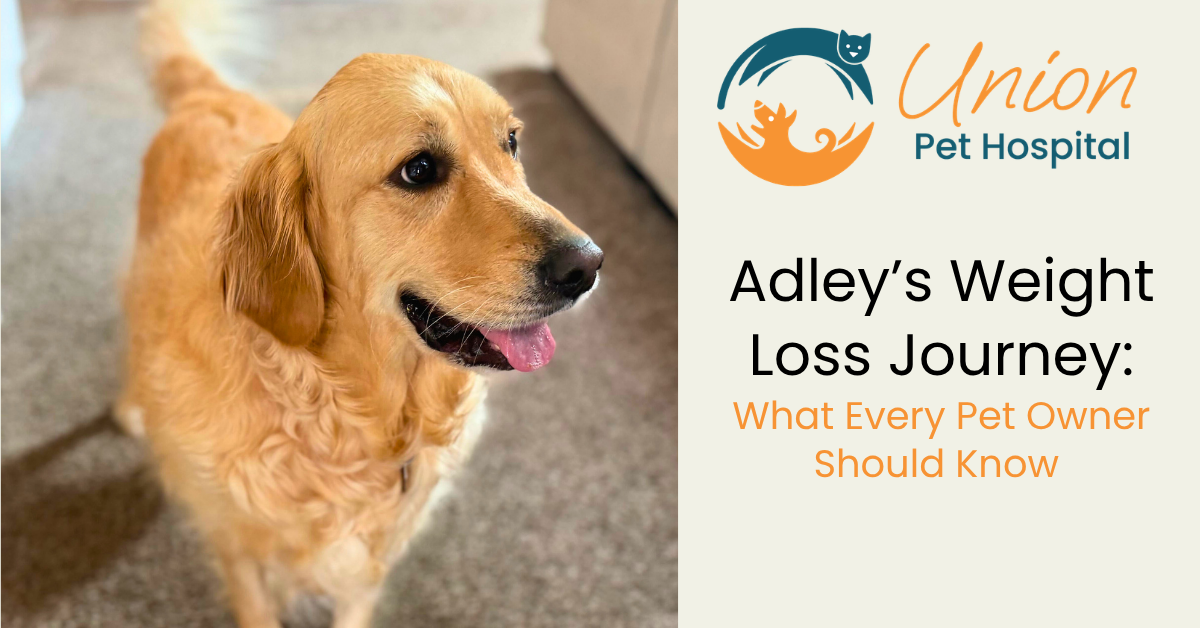
Adley’s Weight-Loss Journey: What Every Pet Owner Should Know About Healthy Weight
Sometimes weight gain happens so gradually that we don’t notice it. A little extra food. A few more treats. Less activity. Before long, those small changes can add up.
For Adley, a Golden Retriever patient at Union Pet Hospital, her weight had reached 82 pounds at her heaviest. Today, she’s 68 pounds—a 14-pound difference!
And when you see her before-and-after photos, the difference is easy to see.
But Adley’s story isn’t really about numbers on a scale. It’s about what can happen when a pet’s family and veterinary team work together to create a realistic weight-management plan.
Why Extra Weight Matters for Your Pet
Extra weight isn’t simply a cosmetic concern. Excess body fat can affect nearly every part of your pet’s body, which is why maintaining a healthy weight is an important part of preventive healthcare.
The most obvious effects are often seen in mobility and the musculoskeletal system. Carrying extra weight places additional demands on the joints, bones, and muscles with every step. Over time, this can contribute to inflammation, arthritis, discomfort, and reduced mobility. Pets who are uncomfortable moving may become less active, creating a cycle that makes maintaining a healthy weight even more difficult.
Extra weight also affects the cardiovascular and respiratory systems. The heart and lungs have to work harder to support a larger body, which can contribute to reduced exercise tolerance and fatigue. For pets already prone to breathing difficulties, carrying excess weight can make those challenges even greater.
Excess body fat can also affect metabolic, endocrine, and organ health. Obesity can alter the way the body regulates blood sugar and metabolism, increase inflammation, and contribute to or complicate certain health conditions. Maintaining a healthy body condition can make it easier to manage existing medical conditions and support overall organ health.
Even heat tolerance and anesthesia can be affected by excess weight. Overweight pets may have more difficulty regulating body temperature and may require additional considerations during anesthesia and medical procedures.
This all adds up to excess weight affecting your pet’s comfort and quality of life. When everyday activities like walking, playing, climbing stairs, or getting up and down become more difficult, those extra pounds can have a meaningful impact on how a pet feels and functions every day.
What Changed for Adley?
Adley’s weight-management plan started with her individual daily calorie needs. Her veterinarian calculated how many calories she needed each day and then looked at what she was already eating—including her regular food and treats.
A prescription weight-management diet, Hill’s Metabolic, was chosen for its calorie content and nutritional profile. Her daily treats were also factored into the plan, rather than simply being eliminated.
As Adley’s weight changed, her diet and calorie needs were reassessed and adjusted along the way. That’s an important part of successful weight management: the plan should change as your pet changes.
For Adley, it wasn’t about simply feeding less. It was about understanding how many calories she needed, where those calories were coming from, and creating a plan that could work in real life.
Why Weighing Food Can Make a Difference
One change that can make weight management more precise is weighing your pet’s food rather than relying on a measuring cup.
Prescription diets and many other pet foods provide nutritional facts based off the weight of a portion, and using a kitchen scale allows you to measure the food more consistently. A measuring cup can be surprisingly imprecise, those “just a few extra pieces” may not seem like much, but small differences in daily calorie intake can add up over time. When a pet has a specific calorie goal for weight loss, consistency matters.
A kitchen scale can take the guesswork out of feeding. Allowing you to consistently provide the amount your veterinary team has recommended.
How Do You Know If Your Dog Is Overweight?
The number on the scale is only part of the picture.
Veterinary teams also use Body Condition Scoring (BCS) to evaluate whether a pet is carrying an appropriate amount of body fat.
Some things we look for include:
- Can you easily feel your pet’s ribs?
- Does your dog have a visible waist when viewed from above?
- Is there an abdominal tuck when viewed from the side?
- Is there excess fat around the chest, abdomen, or other areas?
Because every pet is different, your veterinarian can help determine what a healthy body condition looks like for your individual pet.
It’s Not Just About Feeding Less
One of the biggest misconceptions about pet weight loss is that the answer is simply to give your pet less food. It’s more complicated than that.
Pets have different calorie needs based on their size, age, activity level, lifestyle, and individual health. The type of food matters, too.
For some pets, a veterinary therapeutic weight-management diet may be appropriate. These diets are formulated to help provide balanced nutrition while supporting controlled weight loss.
And don’t forget the extras!
Treats, table food, dental chews, pill pockets, and other snacks all contribute to calories.
That’s why a successful weight-management plan considers the entire day’s intake—not just what’s in the food bowl.
Why Should You Talk to Your Veterinarian?
If you’re wondering whether your pet is carrying a few extra pounds, you’re not alone. Weight gain can be gradual, and sometimes it’s difficult to recognize until it becomes significant.
Your veterinary team can help you:
- Evaluate your pet’s body condition
- Determine an appropriate target weight
- Calculate calorie needs
- Choose an appropriate diet
- Talk about treats and other sources of calories
- Set realistic weight-loss goals
- Monitor progress
- Adjust the plan as your pet’s needs change
And there’s no need to feel embarrassed or guilty.
Weight management is healthcare.
The goal isn’t to make your pet look a certain way. It’s to help them stay comfortable, active, and healthy for as long as possible.
Adley’s Takeaway
Adley’s journey didn’t happen overnight. She went from 82 pounds to 68 pounds, with changes to her diet and feeding plan along the way.
Her story is a great reminder that successful pet weight management is about sustainable changes and ongoing support.
And you don’t have to wait until your pet has a major weight problem to start the conversation.
Not sure if your pet is at a healthy weight? Ask us.
At Union Pet Hospital, we’re happy to talk with you about your pet’s weight, nutrition, and overall health, without judgment.
Because sometimes, a conversation is the first step toward a healthier pet.
Medically Reviewed by Dr. Anna Matchinga, Veterinarian
Dr. Matchinga has been practicing veterinary medicine since 2014 and earned her Doctor of Veterinary Medicine degree from Auburn University.