
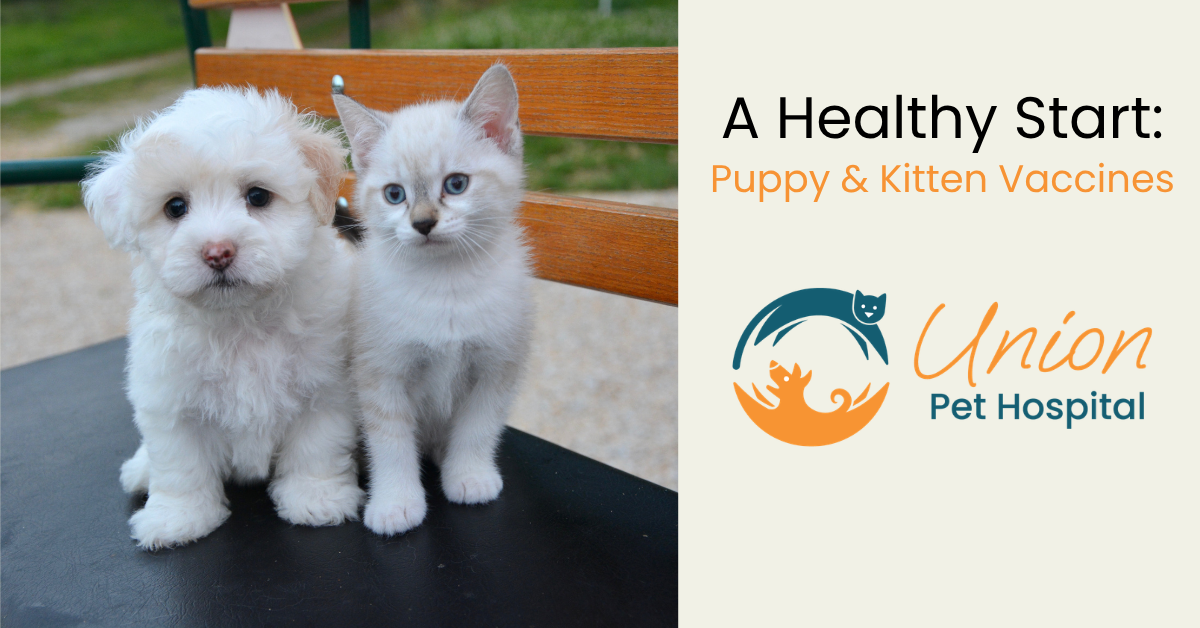
Your New Puppy or Kitten’s First Vaccines
Building a Healthy Foundation for a Lifetime of Health
“The first few months of your pet’s life go by quickly—but the protection you build during that time lasts for years.”
Bringing home a new puppy or kitten is an exciting milestone. There are toys to buy, names to choose, and plenty of adorable photos to take. But amid all the excitement, one of the most important gifts you can give your newest family member is a healthy start.
Vaccinations are one of the safest and most effective ways to protect young pets from serious diseases. Combined with regular wellness exams and parasite prevention, they help build the foundation for a long, happy life.
At Union Pet Hospital, we know that new pet owners often have questions about why so many vaccines are needed and what each one protects against. We’re here to guide you every step of the way.
Why Do Puppies and Kittens Need Multiple Vaccines?
One of the most common questions we hear is:
“Why can’t my puppy or kitten just get one vaccine?”
The answer lies in something called maternal antibodies.
When puppies and kittens nurse from their mother, they receive temporary antibodies that help protect them during their first weeks of life. Those antibodies are wonderful—but they can also prevent vaccines from working properly.
Because every puppy and kitten loses those maternal antibodies at a slightly different rate, vaccines are given as a series, approximately every three weeks. This ensures your pet receives vaccines at the right time for their own immune system to respond and build lasting protection.
Your Puppy’s Vaccine Journey
During your puppy’s first few months, we’ll monitor growth, answer your questions, and build immunity against common infectious diseases.
6–8 Weeks
Your puppy’s first visit typically includes:
- Comprehensive wellness exam
- Intestinal parasite screening and deworming
- Nail trim
- DAP vaccine
- Oral Bordetella vaccine
- Monthly parasite prevention
9–11 Weeks
At this visit we continue building immunity with:
- Pediatric wellness exam
- Intestinal parasite screening
- DAP booster
- Canine Influenza vaccine
- Monthly parasite prevention
12–15 Weeks
As your puppy grows, additional protection is added.
This visit often includes:
- DAP vaccine
- Leptospirosis vaccine
- Lyme vaccine
- Canine Influenza booster
- Monthly parasite prevention
16 Weeks and Older
Your puppy is almost ready for adulthood.
This visit typically includes:
- Pediatric wellness exam
- Rabies vaccine
- Continued protection with DAP, Leptospirosis, and Lyme
- Ongoing parasite prevention
Your Kitten’s Vaccine Journey
Kittens may be tiny, but they face many of the same challenges as puppies—a developing immune system and exposure to diseases they have never encountered before.
6–8 Weeks
Your kitten’s first visit generally includes:
- Wellness examination
- Intestinal parasite screening and deworming
- Nail trim
- FVRCP vaccine
- FeLV/FIV/Heartworm testing (around 8 weeks)
- Monthly parasite prevention
9–11 Weeks
Protection continues with:
- Pediatric exam
- Intestinal parasite screening
- FVRCP booster
- FeLV vaccine
- Monthly parasite prevention
12–15 Weeks
Your kitten will typically receive:
- Pediatric exam
- FVRCP booster
- FeLV booster
- Monthly parasite prevention
16 Weeks and Older
This visit generally includes:
- Pediatric exam
- Rabies vaccine
- Final FVRCP vaccine
- Continued parasite prevention
What Are We Protecting Against?
Puppy Vaccines
DAP
Protects against Distemper, Adenovirus (Hepatitis), and Parvovirus—three highly contagious diseases that can cause severe respiratory illness, liver disease, vomiting, diarrhea, and can be life-threatening in young puppies.
Bordetella
Often called “kennel cough,” Bordetella is a contagious respiratory infection commonly spread anywhere dogs gather, including boarding facilities, daycare, grooming salons, training classes, and dog parks.
Canine Influenza
Dog flu is a contagious respiratory virus that spreads easily between dogs in social settings and can sometimes lead to pneumonia.
Leptospirosis & Lyme Disease
These bacterial diseases can affect both pets and people. Leptospirosis can damage the kidneys and liver, while Lyme disease, transmitted by ticks, can cause fever, joint pain, and kidney problems.
Rabies
Rabies is a fatal disease that affects the brain and nervous system of mammals, including people. Vaccination is required by state law in Kentucky and protects both your pet and your community.
Kitten Vaccines
FVRCP
This combination vaccine protects against Feline Viral Rhinotracheitis, Calicivirus, and Panleukopenia (feline distemper). These diseases can cause severe respiratory infections, eye disease, fever, vomiting, diarrhea, and can be especially dangerous for kittens.
FeLV
Feline Leukemia Virus weakens a cat’s immune system and can lead to serious illness and certain cancers. Vaccinating kittens early helps protect them during one of the most vulnerable stages of life.
Rabies
Like dogs, cats are required to receive rabies vaccination because the disease is fatal and can be transmitted to humans. Even indoor cats should be protected in case wildlife enters the home or they accidentally escape outside.
“But My Pet Stays Indoors…”
This is one of the biggest misconceptions we hear.
Many people assume that indoor pets don’t need vaccines—but germs don’t always stay outside.
Dogs can encounter disease-causing viruses and bacteria during walks, training classes, grooming appointments, or simply by exploring the yard. Even germs carried inside on shoes, clothing, or bags can pose a risk to young puppies.
Indoor cats face risks too. Wildlife such as bats can enter homes, pets can slip outside unexpectedly, and some viruses spread through indirect exposure. Vaccinating indoor cats helps protect them throughout their lives.
Vaccines Are Only Part of the Picture
Each puppy or kitten visit is also an opportunity to monitor growth, answer questions, and keep your new companion healthy.
During these appointments, we’ll also discuss:
- Nutrition
- Parasite prevention
- Microchipping
- Behavior and training
- Socialization
- Spaying or neutering
- Dental health
These visits are designed to support your pet’s overall health—not just administer vaccines.
Don’t Forget Parasite Prevention
Young pets are especially vulnerable to parasites.
Mosquitoes can transmit heartworms, fleas and ticks can spread disease, and intestinal parasites are common in puppies and kittens. Monthly parasite prevention helps protect your pet from these hidden threats before they become serious health problems.
Frequently Asked Questions
Why does my pet need so many boosters?
Because maternal antibodies fade at different times, multiple vaccines ensure your puppy or kitten develops strong, lasting immunity.
My breeder or rescue already vaccinated my pet. Do they still need more?
Yes. One vaccine is only the beginning of the series. Completing the recommended schedule is the best way to ensure full protection.
Do indoor cats really need vaccines?
Yes. Indoor cats can still be exposed to certain diseases, and rabies vaccination is required by law in many areas.
Can my puppy meet other dogs before finishing vaccines?
Safe socialization is important, but it should be done thoughtfully. Your veterinary team can recommend the safest activities based on your puppy’s age and vaccine status.
A Healthy Start Lasts a Lifetime
The first few months of your puppy’s or kitten’s life are filled with growth, learning, and new experiences. By staying on schedule with vaccines, wellness exams, and parasite prevention, you’re giving your newest family member the best possible start.
Whether you’ve welcomed home a playful puppy or a curious kitten, our team is here to answer your questions and partner with you every step of the way.
Medical Review & Disclaimer
This article has been medically reviewed for accuracy by Dr. Jessica Henson, DVM, Associate Veterinarian at Union Pet Hospital. Our goal is to provide reliable, up-to-date pet health information to help you make informed decisions about your pet’s care. The information provided is intended for educational purposes only and should not replace professional veterinary advice, diagnosis, or treatment. Because every pet is unique, we encourage you to contact Union Pet Hospital if you have questions or concerns about your pet’s health or to schedule an appointment with one of our veterinary professionals.